Colloid Solution: The Powerful and Positive Science Behind Everyday Mixtures
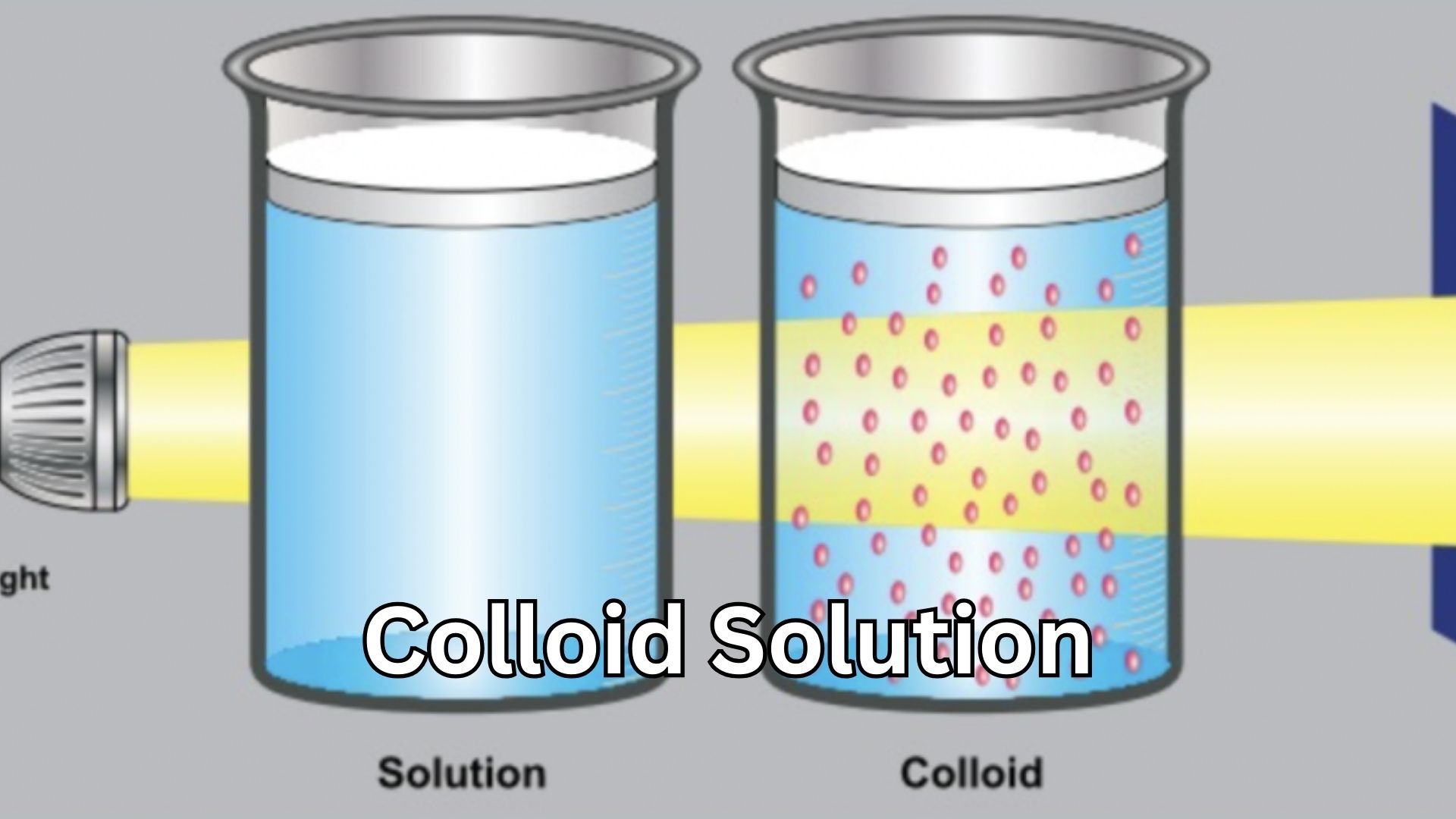
A colloid solution is one of the most fascinating forms of mixtures found in both nature and modern science, quietly shaping everything from the food we eat to the medicines we trust. Unlike ordinary mixtures, this special system sits perfectly between a true solution and a suspension, offering unique stability and behavior that make it incredibly valuable. Understanding how it works not only strengthens basic chemistry knowledge but also reveals why so many industries rely on it for reliable, long-term results. At first glance, these mixtures may look simple, but their internal structure tells a much more powerful story. Tiny particles remain evenly distributed without settling, creating a balance that feels almost effortless. This positive characteristic is the main reason scientists, manufacturers, and researchers continue to explore and use them in innovative ways. Understanding a Colloid Solution in Simple Terms To truly appreciate a colloid solution, it helps to look at how it behaves at the microscopic level. In this type of system, very small particles of one substance are dispersed throughout another. These particles are larger than those in a true solution but still small enough to remain suspended instead of sinking to the bottom. What makes this structure remarkable is its stability. The dispersed particles stay evenly spread due to natural molecular motion and surface interactions. Because of this, the mixture does not separate easily, even when left undisturbed for long periods. This balance explains why milk remains uniform, why fog floats in the air, and why many creams maintain their texture. Another important aspect is light interaction. When light passes through such a mixture, it scatters gently, making the path of light visible. This behavior helps scientists identify and study these systems in laboratories and research environments. How Colloidal Systems Differ from Other Mixtures Many people confuse these systems with ordinary solutions or suspensions, but the difference lies in particle size and behavior. In true solutions, particles dissolve completely at the molecular level, creating a uniform composition that never separates. Suspensions, on the other hand, contain much larger particles that eventually settle due to gravity. A colloid solution stands confidently in between. Its particles are small enough to resist settling yet large enough to retain their individual properties. This middle ground gives it a unique identity and explains why it behaves differently under filtration or simple separation methods. Because of this structure, filtration techniques that work for suspensions often fail here. The particles pass through ordinary filters, maintaining the mixture’s uniform appearance. This property plays a key role in industrial processing and product formulation. Types of Colloidal Forms Found in Nature Nature offers countless examples of colloidal systems that operate effortlessly without human intervention. Clouds, for instance, are formed when tiny water droplets remain dispersed in air. Similarly, blood is a complex biological system where essential components float evenly within plasma. In ecosystems, these systems help transport nutrients and energy efficiently. Soil particles mixed with water create environments where minerals remain available to plant roots. This natural balance supports life on a massive scale and highlights the quiet power behind these mixtures. Even gemstones and natural pigments often owe their appearance to colloidal behavior, where particle distribution affects color and transparency in visually striking ways. Real-World Applications in Daily Life The influence of a colloid solution extends far beyond textbooks and laboratories. Many everyday products rely on this structure to deliver consistency, taste, and effectiveness. Food items like butter, yogurt, and ice cream maintain their appealing texture because of evenly dispersed components. Personal care products also benefit greatly. Lotions, shampoos, and creams are designed to remain stable over time, ensuring that active ingredients do not separate. This reliability builds consumer trust and enhances product performance. Household items such as paints and inks depend on controlled particle dispersion to provide smooth application and uniform color. Without this structure, these products would fail to meet quality expectations. Importance in Medical and Pharmaceutical Fields In healthcare, the role of a colloid solution is both critical and positive. Many drug delivery systems use this structure to ensure that active compounds remain evenly distributed. This consistency allows accurate dosing and improved absorption within the body. Intravenous fluids, diagnostic agents, and even some vaccines rely on controlled dispersion to function effectively. The stability of these systems helps protect sensitive ingredients and extends shelf life, which is essential for global medical distribution. Researchers also explore these systems for targeted therapies, where controlled particle size can influence how medicines interact with specific cells or tissues. Industrial and Technological Significance Modern industries depend heavily on colloidal science to maintain efficiency and quality. In manufacturing, a colloid solution is often used to create coatings, adhesives, and lubricants that perform reliably under stress. The uniform distribution of particles ensures predictable behavior during application and use. Environmental technology also benefits from these systems. Water purification processes use controlled dispersion to remove impurities effectively. In energy storage and material science, advanced research continues to explore how particle behavior at this level can lead to stronger and more efficient materials. This industrial relevance shows how fundamental chemistry concepts translate directly into economic and technological progress. Stability and Behavior Over Time One of the most attractive features of a colloid solution is its resistance to separation. Electrostatic forces, particle motion, and interaction with the surrounding medium all work together to maintain balance. This natural stability reduces the need for constant mixing or special storage conditions. Temperature, concentration, and external forces can influence behavior, but well-designed systems remain reliable under normal conditions. This predictability is why manufacturers invest heavily in understanding and controlling colloidal properties. By adjusting particle size and surface characteristics, scientists can fine-tune stability to match specific needs, from food preservation to advanced electronics. Advantages That Make Colloids So Valuable The advantages of a colloid solution are both practical and economic. Its ability to remain uniform enhances product lifespan and consumer satisfaction. The visual appeal, texture, and performance of many products depend directly on this structure. From a scientific perspective, … Read more