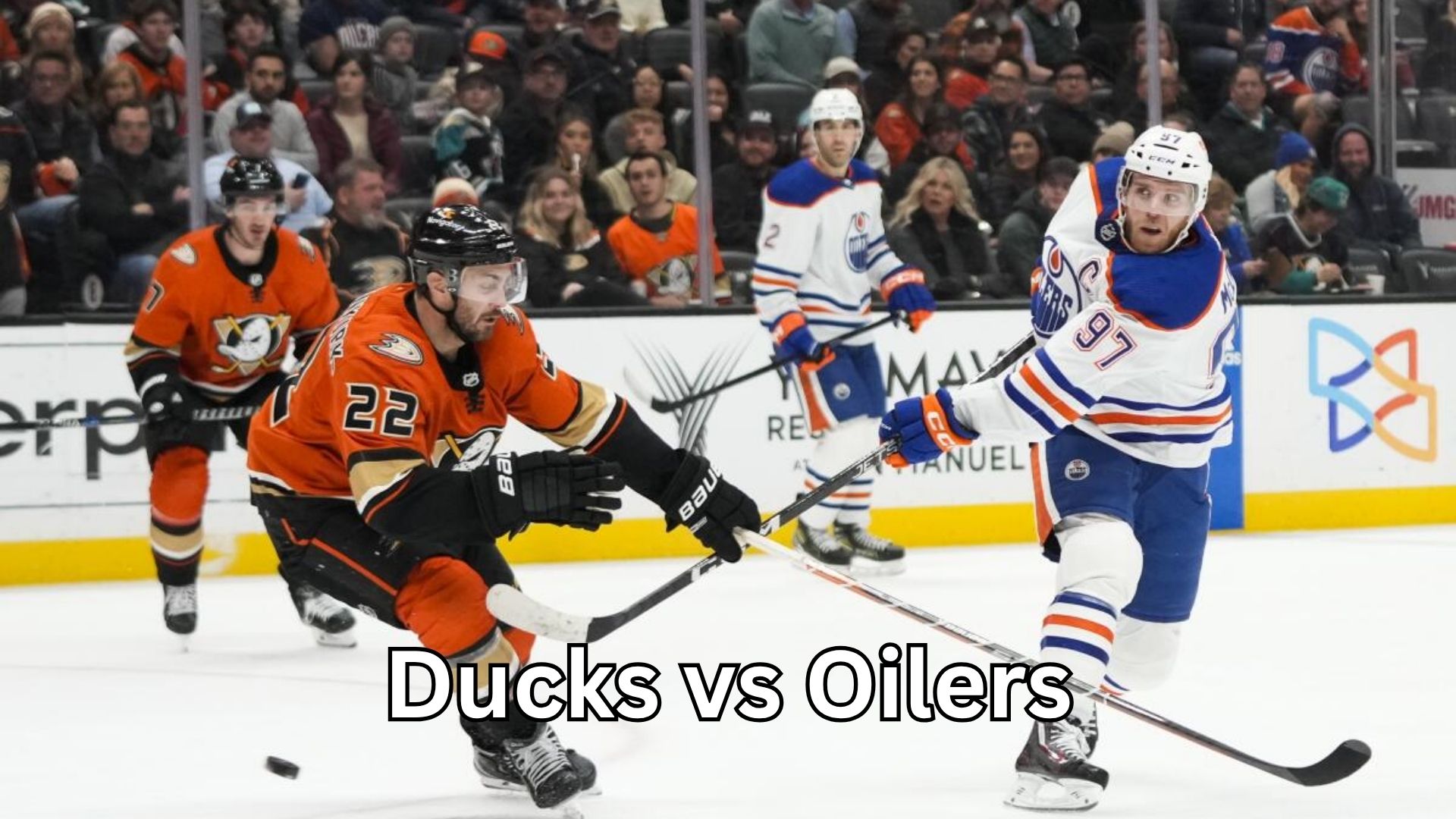
Ducks vs Oilers feels like a cruel cosmic joke in 2026. The hockey gods have arranged a first-round collision that nobody in Edmonton wanted and nobody in Anaheim expected to win. The Oilers enter as heavy favorites, carrying the scar tissue of consecutive Stanley Cup Final heartbreaks. The Ducks arrive as the youngest playoff roster in modern NHL history, blissfully unaware they are supposed to lose. Before you pencil Connor McDavid into the second round, understand the hidden statistical nightmare that has haunted this matchup for nearly a decade and the one fatal flaw in Edmonton’s armor that Anaheim’s speed is perfectly designed to exploit. The entire hockey world watched the regular season series unfold with a mixture of disbelief and morbid curiosity. The upstart Ducks did not just compete with the mighty Oilers. They embarrassed them. Twice. At Rogers Place. And now those same two teams must wage a best-of-seven war with everything on the line.
The Haunting Ghost of Two Thousand Seventeen
To understand why this particular Pacific Division clash sends shivers down the spines of Edmonton fans, you must excavate a memory most have tried desperately to bury. The year was 2017. Connor McDavid had just completed his first fully healthy NHL season, capturing the Art Ross Trophy and the Hart Memorial Trophy as the league’s most valuable player. He was twenty years old and already the undisputed king of hockey. The Oilers drew the Anaheim Ducks in the second round of the Western Conference playoffs. What followed was a seven-game masterpiece of agony.
Edmonton surged to a two-game lead on the road. The city of Edmonton dared to dream. Then the Ducks, a veteran-laden machine featuring Ryan Getzlaf, Corey Perry, and Ryan Kesler, systematically dismantled the youthful exuberance of the Oilers. They won three consecutive elimination games, including a double-overtime thriller in Game 5 that saw the Ducks erase a three-goal deficit with just three minutes and sixteen seconds remaining in regulation. That collapse remains the single most devastating regular period of hockey in Oilers franchise history since the Steve Smith own-goal in 1986. The Ducks won Game 7 by a score of 2-1. Nick Ritchie, of all people, scored the series-winning goal on a fluttering puck that Cam Talbot simply missed. McDavid skated off the Honda Center ice with tears in his eyes, a generational talent denied by a wall of orange jerseys and playoff savvy.

The Astonishing Role Reversal of Two Thousand Twenty Six
Nine years have passed. The calendar now reads April 2026. Everything has changed, yet nothing has changed. The Edmonton Oilers are no longer the naive upstarts. They are the battle-hardened veterans who have suffered the most painful fate imaginable: losing in the Stanley Cup Final in consecutive seasons to the exact same opponent, the Florida Panthers. This roster knows the weight of expectation. They understand the physical toll of playing deep into June. They carry the quiet desperation of a core that may never get another chance if they fail again.
The Anaheim Ducks are the polar opposite. They are the youngest team to qualify for the Stanley Cup Playoffs since the 1980s. General Manager Pat Verbeek orchestrated a scorched-earth rebuild that landed franchise cornerstones Leo Carlsson, Cutter Gauthier, and Beckett Sennecke. Their average age on the blue line hovers around twenty-three years old. Goaltender Lukas Dostal emerged as a Vezina Trophy finalist this season, but he has never played a single minute of postseason hockey in North America. By every conceivable metric of experience, the Ducks should be terrified. They should be overwhelmed. Yet, when the puck dropped for their four regular season meetings, the kids from Orange County treated the Oilers like a practice squad.
The Shocking Regular Season Ownership
The four-game season series between these two clubs in the 2025-26 campaign was not close. It was a systematic humiliation. Anaheim won three of the four contests, including two victories at Rogers Place where the Edmonton crowd was silenced into a state of stunned disbelief. The most alarming result came on a frigid Tuesday night in late January. The Ducks waltzed into Edmonton and delivered a 6-1 thrashing that felt even more lopsided than the scoreboard indicated. McDavid was held without a point. Leon Draisaitl finished the night with a minus-four rating. The Ducks’ young defense corps, led by the rapidly improving Olen Zellweger and Pavel Mintyukov, completely neutralized the most feared offensive duo on the planet.
This was not a case of the Oilers taking a night off. This was a tactical masterclass executed by Ducks head coach Greg Cronin. The Ducks deployed a neutral zone trap that forced Edmonton’s defensemen to make long, low-percentage stretch passes. When those passes inevitably missed their mark, Anaheim’s fleet-footed forwards turned the puck back up ice with terrifying speed. The Oilers’ defensive unit, which has been the subject of intense scrutiny for years, looked as if they were skating in quicksand. Darnell Nurse and Evan Bouchard, despite their offensive gifts, consistently lost foot races to the fresh legs of Gauthier and Sennecke. This is the precise matchup nightmare that keeps Edmonton’s front office awake at night.
The Hidden Fatal Flaw of the Edmonton Oilers
Every hockey analyst in North America will tell you the same story. Edmonton possesses the two best forwards in the world. McDavid and Draisaitl are cheat codes. When the game is on the line, you simply throw number ninety-seven over the boards and wait for magic to happen. This narrative is not wrong, but it is dangerously incomplete. The Oilers have a glaring structural weakness that the Ducks are uniquely positioned to eviscerate.
Edmonton’s defensive depth is paper thin. After the top pairing, the drop-off is precipitous. The third defensive pairing for the Oilers has been a rotating cast of journeymen and aging veterans who cannot keep pace with the modern NHL’s speed. The Ducks do not just have one fast forward line. They have three. Trevor Zegras, when he is not busy deking defenders out of their skates, can fly through the neutral zone. Cutter Gauthier is a six-foot-three power forward who moves like a gazelle. Mason McTavish plays a heavy, north-south game that punishes defensemen who struggle with gap control. When the Oilers are forced to roll their bottom defensive pair, the Ducks will smell blood in the water. This is not speculation. This is exactly what happened in the 6-1 January drubbing. Anaheim’s depth scorers feasted on Edmonton’s defensive miscues.

Why Youthful Ignorance Is a Playoff Superpower
There is a prevailing myth in professional sports that playoff experience is the ultimate currency. Veterans win. Rookies lose. History is littered with examples that support this theory. But history is also littered with stunning upsets that defied all logic. The reason those upsets happen is simple: young players do not know they are supposed to be scared.
When you are twenty-two years old and playing in your first playoff series against Connor McDavid, the pressure is not on you. The pressure is on McDavid. The entire hockey universe expects Edmonton to win in four or five games. Anything less would be considered a catastrophic failure. If the Ducks lose Game 1 in Edmonton, the reaction in their dressing room will be a collective shrug. They are playing with house money. They have already exceeded every expectation by simply qualifying for the dance. This psychological dynamic is a powerful, invisible force. The Oilers will feel the weight of a city, a fanbase, and a legacy pressing down on their shoulders. The Ducks will feel nothing but the joy of playing a game they love.
Consider the 2019 Columbus Blue Jackets. They entered the playoffs as a wildcard team against the historically dominant Tampa Bay Lightning, who had just completed a sixty-two win regular season. Nobody gave Columbus a chance. They swept Tampa Bay in four straight games. Why? Because the Lightning played tight, gripping their sticks too hard, terrified of failure. The Blue Jackets played loose and free. This is the exact blueprint the Ducks will attempt to follow.
The Curious Case of Goaltending Consistency
Lukas Dostal stood on his head for the Anaheim Ducks during the 2025-26 regular season. He posted a save percentage hovering near .920 while facing an average of thirty-three shots per night. He single-handedly stole at least ten points in the standings. But the Stanley Cup Playoffs are a different beast. The intensity of every shot, the traffic in front of the net, and the relentless nature of a seven-game series test a goaltender’s mental fortitude in ways the regular season cannot replicate.
At the opposite end of the rink, Stuart Skinner remains one of the most polarizing figures in Alberta. He backstopped the Oilers to Game 7 of the Stanley Cup Final just last June. He also allowed a back-breaking, unscreened shot from the blue line in a crucial elimination game that many fans still refuse to rewatch. Skinner is a rhythm goaltender. When he sees a lot of shots early, he locks in and becomes nearly unbeatable. When the Oilers dominate possession and he faces only sporadic, high-danger chances, he sometimes loses his tracking and allows a soft goal. The Ducks’ game plan will undoubtedly involve throwing pucks at the net from every conceivable angle, not just to score, but to disrupt Skinner’s rhythm. If Dostal can match or even slightly outperform Skinner, the entire series calculus shifts dramatically.
The Unspoken Narrative of Connor McDavid’s Legacy
This section is uncomfortable for Edmonton fans to read, but it must be addressed. Connor McDavid is the greatest hockey player of his generation. His speed, vision, and puck control are unmatched in the history of the sport. Yet, his trophy case contains only one Stanley Cup ring, earned in a hard-fought victory against the Florida Panthers in 2024. Since that triumph, he has lost twice in the Final. He is now twenty-nine years old, entering the back half of his prime. The window for him to cement his legacy alongside Wayne Gretzky, Mario Lemieux, and Sidney Crosby as a multiple-time champion is beginning to narrow.
A first-round exit in 2026 would be catastrophic for the narrative surrounding number ninety-seven. It would invite comparisons to players who dominated regular seasons but could not consistently deliver in the spring. It would raise uncomfortable questions about the supporting cast and the team’s construction. McDavid is acutely aware of this pressure. He is a student of the game and its history. He knows what is at stake. This is why the Ducks are so dangerous. They are not just playing against a hockey team. They are playing against the crushing weight of an entire franchise’s existential anxiety. A young, fearless opponent is the last thing a team carrying this much psychological baggage wants to face.
The Secret Tactical Adjustment Anaheim Must Deploy
If Greg Cronin wants to pull off the upset of the decade, he must deploy one specific tactical adjustment that few analysts are discussing. The Oilers’ power play is historically lethal. It converts at a rate hovering near thirty percent. Taking penalties against Edmonton is essentially an automatic goal against. The Ducks, however, lead the league in drawing penalties. Their speed through the neutral zone forces defensemen to hook, hold, and trip.
The key to this series for Anaheim is not to simply kill penalties. It is to avoid taking them in the first place. The Ducks must play a disciplined, stick-on-puck style that frustrates Edmonton’s top players without crossing the line. If the game is played at even strength for fifty-five minutes, the Ducks have a legitimate chance to win. Their five-on-five underlying numbers are actually superior to Edmonton’s in several key categories, including expected goals share and high-danger chance creation. If the game devolves into a special teams battle, the Oilers will run away with the series in five games. Anaheim’s discipline, or lack thereof, will be the single greatest determining factor in this matchup.
The Emotional Toll of a Seven Game Grind
Playoff hockey is not a sprint. It is a war of attrition. The first round is uniquely brutal because the intensity spikes from zero to a hundred in an instant. The Oilers have played more hockey over the past two calendar years than any other team in the league. Their core players have logged an additional thirty-plus playoff games on top of an eighty-two game regular season schedule. That mileage accumulates in the legs and the mind.
The Ducks, conversely, are fresh. Their season ended with a comfortable playoff cushion. They enter the postseason with a clean bill of health and boundless energy. If this series extends to six or seven games, the cumulative fatigue in Edmonton’s top players could become a visible factor. Watch McDavid‘s shifts in the third period of a tight game. If he is still exploding through the neutral zone with his trademark acceleration, the Ducks are in trouble. If he is gliding back to the bench with his head down, gasping for air, Anaheim has a real opportunity to deliver a knockout blow.
The X Factor No One Is Talking About
Trevor Zegras is the most talented player on the Anaheim roster, but he is also the most mercurial. He can score a highlight-reel, lacrosse-style goal that breaks the internet one shift, and then commit a mind-numbing neutral zone turnover that leads directly to a goal against the next shift. His defensive awareness has been the primary critique of his game since his days at Boston University.
But the playoffs have a strange way of maturing young stars. The structure of postseason hockey, the relentless forechecking, and the requirement to play a full two hundred foot game can either break a player or forge them into something greater. If Zegras commits to the defensive side of the puck and uses his elite offensive instincts selectively, he becomes a matchup nightmare for Edmonton’s bottom six forwards. If he reverts to his freelancing, riverboat gambler style, he will find himself stapled to the bench in crucial moments. Which Trevor Zegras shows up will largely determine whether this series is competitive or a coronation.
A Glimpse Into the Future of the Pacific Division
Regardless of the outcome of this first-round series, the hockey world is witnessing a significant shift in the balance of power within the Pacific Division. The Ducks are not a one-year wonder. Their prospect pipeline remains overflowing with talent. They have additional first-round picks in the upcoming draft. They are positioned to be a thorn in Edmonton’s side for the next half-decade.
This 2026 series is the opening chapter of what could become a renewed, bitter rivalry. The history of 2017 still stings for Edmonton. The present of 2026 offers a chance at redemption. The future suggests these two franchises will be inextricably linked for years to come. For the neutral fan, this is a gift. For the fanatics in Orange County and Northern Alberta, it is a recipe for sleepless nights and shattered nerves.
The Quiet Confidence of a Team with Nothing to Lose
There is a profound difference between a team that expects to win and a team that hopes to win. The Edmonton Oilers expect to win the Stanley Cup. Anything less is abject failure. The Anaheim Ducks hope to win a round, maybe two, and gain invaluable experience for the core group. That disparity in pressure is the great equalizer. It is why this series will be far closer than the betting odds suggest. It is why the Ducks have a legitimate, not just a puncher’s, chance to shock the world.
When the puck drops at Rogers Place for Game 1, the noise will be deafening. The Oilers will come out flying, desperate to assert their dominance. The Ducks will need to weather the storm for the first ten minutes. If they survive that initial onslaught and settle into their structured, speedy game, the doubt will begin to creep into the Edmonton bench. And doubt, in the Stanley Cup Playoffs, is a poison that spreads faster than any virus.
The Ducks have the speed. They have the goaltending. They have the freedom of zero expectations. The Ducks have the speed. They have the goaltending. They have the freedom of zero expectations. The Oilers possess the two most electrifying and ruthlessly efficient offensive weapons the sport has witnessed in a generation. That is a heavyweight fight worthy of prime-time television. The only certainty is that the hockey world will be watching, captivated by the beautiful, brutal, and unpredictable theater of the Stanley Cup Playoffs. That is a heavyweight fight worthy of prime-time television. The only certainty is that the hockey world will be watching, captivated by the beautiful, brutal, and unpredictable theater of the Stanley Cup Playoffs.
FAQS
Why did the Ducks dominate the regular season series against the Oilers in 2026?
The Ducks exploited Edmonton’s lack of defensive foot speed. By utilizing a structured neutral zone trap, Anaheim forced Edmonton’s defensemen into making long, risky passes. When those passes missed their target, the Ducks’ young, fast forwards transitioned quickly the other way, creating odd-man rushes that overwhelmed the Oilers’ goaltending.
How does the 2026 playoff matchup compare to the 2017 series between these two teams?
The roles are completely reversed. In 2017, the Ducks were the experienced, veteran-heavy team and the Oilers were the young, talented upstarts. In 2026, Edmonton is the battle-tested core with multiple deep playoff runs under their belt, while Anaheim fields the youngest playoff roster in the NHL. The dynamic of pressure versus freedom has flipped entirely.
What is the single most important factor for an Anaheim upset?
Discipline is the non-negotiable key for the Ducks. Edmonton’s power play is historically elite and converts at an extremely high rate. If Anaheim takes unnecessary penalties, the series will be over quickly. If they play a clean, five-on-five game, their speed and depth give them a legitimate chance to win four games.
Can Lukas Dostal handle the pressure of his first NHL playoff start?
Dostal was a Vezina Trophy finalist in 2026 and faced a high volume of shots nightly during the regular season. While playoff pressure is unique, his calm demeanor and technical soundness suggest he is well-equipped to handle the stage. The bigger question is whether the young defense in front of him can limit second-chance opportunities.
What happens to Connor McDavid’s legacy if the Oilers lose in the first round?
A first-round exit would be a significant blow to the narrative surrounding McDavid’s postseason resume. Despite being the best player in the world, multiple early exits would invite comparisons to great regular season performers who struggled to achieve consistent playoff success. The pressure on him to carry this team is immense.
Are the Ducks built for sustained success beyond this 2026 season?
Yes. The Ducks have one of the deepest prospect pools in the NHL, featuring several young stars already contributing at the NHL level and more high-end talent developing in the system. Their front office has positioned the franchise to be a contender in the Pacific Division for the next five to seven years, not just a one-year wonder.
Also Read: Google Block Breaker Sabotage: Why Your Network Hates Your 5-Minute Sanity Break (2026 Exposed)