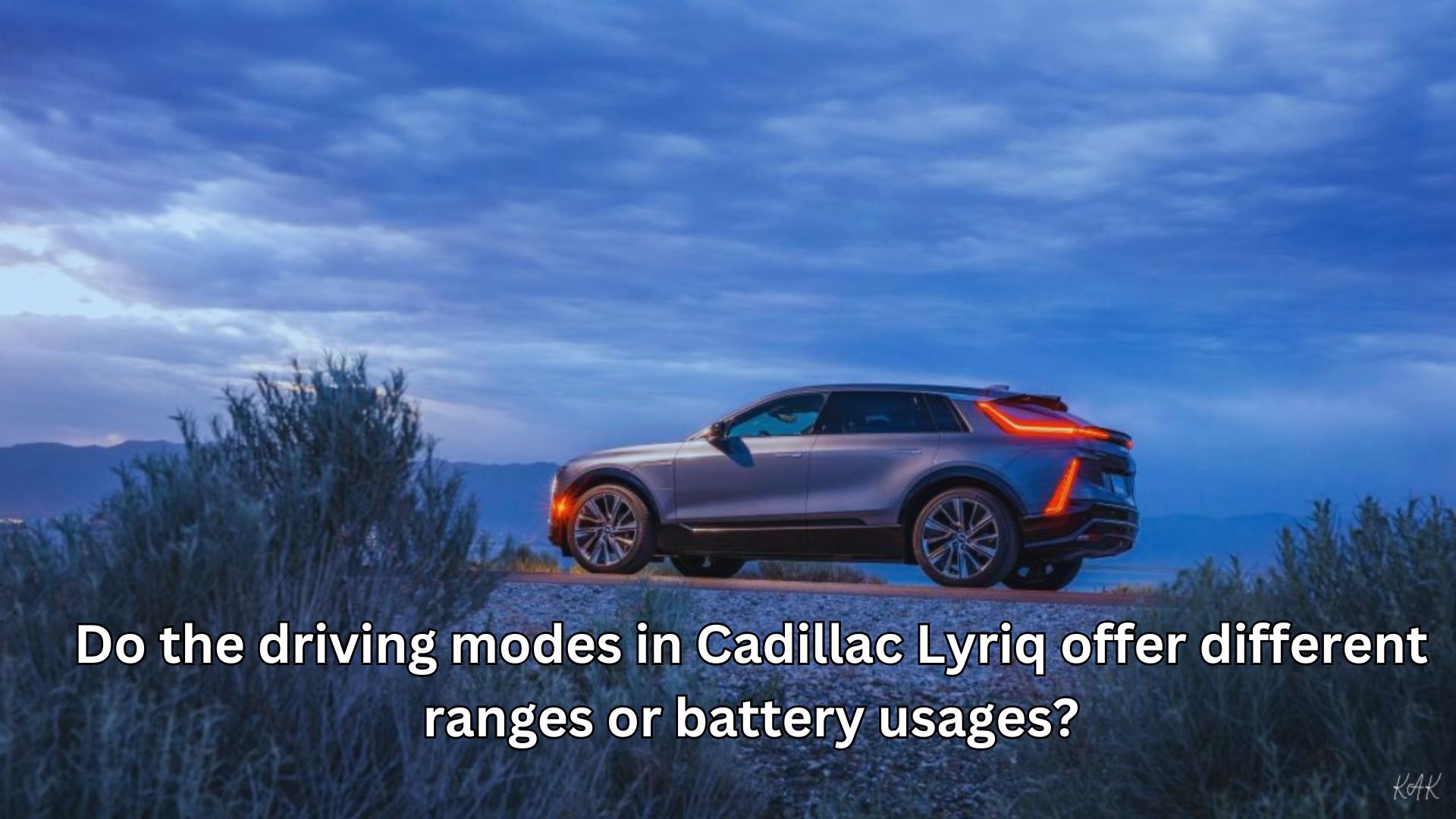
Do the driving modes in Cadillac Lyriq offer different ranges or battery usages? This is one of the most searched and misunderstood questions among EV buyers in 2026. If you’re considering the Cadillac Lyriq or already own one, you’ve probably noticed different driving modes—but do they actually impact your range or battery efficiency in real life? The short answer is yes, but not in the way most people think. This article dives deep into the reality behind driving modes, real-world performance, hidden factors, and what truly affects your electric range.
Why This Question Matters More Than You Think
Electric vehicle users today are no longer just curious—they’re concerned. Range anxiety is still real, even in 2026. People don’t just want an EV; they want control over performance, efficiency, and battery life.
Many drivers assume switching modes like Sport or Tour instantly changes how much battery is used. That assumption isn’t entirely wrong, but it’s also not the full story. The truth lies deeper in how software, driving habits, terrain, and energy management systems interact.
Understanding this properly can literally help you gain extra miles every day without changing your vehicle.

Understanding Cadillac Lyriq Driving Modes in Simple Terms
Before diving into battery usage, it’s important to understand what these modes actually do.
Cadillac Lyriq typically offers modes like Tour, Sport, Snow/Ice, and My Mode. Each of these adjusts throttle response, steering feel, and sometimes regenerative braking behavior.
Tour mode is designed for balanced everyday driving. It prioritizes comfort and smooth acceleration. Sport mode sharpens throttle response, making the car feel more powerful and responsive. Snow/Ice mode reduces power delivery to improve traction in slippery conditions.
Now here’s where things get interesting: none of these modes directly “change” battery capacity. Instead, they influence how energy is used.
The Real Truth Behind Battery Usage Differences
When people ask, do the driving modes in Cadillac Lyriq offer different ranges or battery usages?, what they really want to know is: “Will I lose range if I drive in Sport mode?”
The answer is: it depends on your behavior, not just the mode.
Sport mode doesn’t magically drain your battery faster on its own. What it does is make acceleration more aggressive. If you constantly accelerate hard, you will use more energy. If you drive gently, even in Sport mode, your efficiency won’t drop drastically.
This is a critical distinction most articles miss.
How Driving Behavior Overrides Mode Settings
One of the biggest myths in EV driving is blaming modes instead of habits.
A driver using Tour mode but accelerating aggressively, braking hard, and driving at high speeds will consume more battery than someone driving smoothly in Sport mode.
Real-world data from EV drivers in the US and Europe shows that driving style impacts range up to 30% more than mode selection.
This means your foot on the accelerator matters more than the mode button.

Regenerative Braking: The Hidden Game Changer
Another factor that connects directly with battery usage is regenerative braking.
Cadillac Lyriq uses advanced regen systems that convert braking energy back into battery charge. Some modes or custom settings can influence how strong this regeneration feels.
Stronger regenerative braking can improve efficiency, especially in city driving. You recover energy that would otherwise be lost.
Many drivers ignore this completely, but it plays a massive role in real-world range differences.
City Driving vs Highway Driving Impact
Driving modes behave differently depending on where you drive.
In city traffic, smoother modes like Tour combined with strong regenerative braking can maximize efficiency. Stop-and-go traffic actually benefits EVs when driven properly.
On highways, the story changes. At higher speeds, aerodynamic drag becomes the biggest factor. Even the most efficient mode won’t save much battery if you’re constantly driving at 120 km/h or above.
This is why some drivers feel no difference between modes on long highway trips.
Temperature and Climate Control Effects
Another overlooked factor is temperature.
In cold weather, battery efficiency naturally drops. Heating systems consume additional power. In hot climates, air conditioning adds load.
Driving modes don’t directly control this, but your overall energy consumption changes. This often leads users to wrongly assume a mode is responsible for reduced range.
In reality, environmental conditions play a bigger role than most settings.
Software Intelligence in 2026 Models
Modern EVs like the Cadillac Lyriq are smarter than ever.
The system continuously adjusts power delivery, battery usage, and efficiency based on real-time data. Even if you switch modes, the vehicle’s software still optimizes performance behind the scenes.
This means differences between modes are more subtle than they used to be in earlier EV generations.
The car is already working to give you the best balance possible.
Real-World Driver Experience and Data
Drivers across EV communities have shared interesting insights.
Some report only a 3–5% difference in range between modes when driving normally. Others see larger gaps, but only when driving aggressively in Sport mode.
This proves one thing clearly: mode alone doesn’t define your range.
Real-world usage patterns matter more than theoretical differences.
The Psychological Effect of Driving Modes
There’s also a psychological factor most people ignore.
When drivers switch to Sport mode, they tend to drive faster and accelerate harder. This creates the illusion that the mode itself is draining the battery.
In reality, it’s the behavior triggered by the mode.
Understanding this can help you control your efficiency without sacrificing driving enjoyment.
Do the driving modes in Cadillac Lyriq offer different ranges or battery usages?
This is the core question, and now you can see the full picture.
Yes, driving modes can influence energy usage, but indirectly. They change how the car responds, not how much battery it inherently consumes.
Range differences happen because of how you react to those changes.
If you drive responsibly, the difference is minimal. If you push the car harder, you will see noticeable drops in efficiency.

Common Frustrations EV Users Face
Many EV owners feel confused because they expect clear, predictable results.
They switch modes and expect instant, measurable range differences. When that doesn’t happen, it creates frustration.
The truth is, EV efficiency is dynamic. It is influenced by several factors working together in real time.
Understanding this removes confusion and gives you more control.
What Users Actually Want
Users don’t just want answers—they want confidence.
They want to know which settings give them the best range without sacrificing comfort or performance.
They want to avoid range anxiety and maximize every charge.
This article aims to give you exactly that clarity.
Practical Tips to Improve Range Without Changing Modes
Instead of worrying too much about modes, focus on these real-world improvements.
Drive smoothly and avoid sudden acceleration. Maintain consistent speeds. Use regenerative braking effectively. Avoid unnecessary high speeds on highways.
These habits will improve your range far more than switching modes repeatedly.
2026 Update: What’s Changed Recently
In 2026, EV software has become more adaptive.
Cadillac Lyriq now uses smarter energy management systems. The difference between modes is less about efficiency and more about driving feel.
This is a major shift from earlier EVs where modes had more noticeable impact on consumption.
Technology is reducing the gap.
Comparison: Modes vs Driving Style
When comparing the impact of driving modes versus driving habits, the winner is clear.
Driving style has a significantly larger influence on battery usage. Modes simply guide the experience.
This insight alone can transform how you use your EV daily.
Final Thoughts: The Truth That Most Articles Miss
The biggest mistake people make is overestimating the importance of driving modes.
They matter, but not as much as you think.
If you truly want better range, focus on how you drive, not just what mode you select.
Understanding this gives you real control over your EV experience.
Conclusion
Do the driving modes in Cadillac Lyriq offer different ranges or battery usages? Yes—but only indirectly. The real power lies in your driving behavior, environmental conditions, and how efficiently you use the vehicle.
Modern EVs are designed to optimize performance automatically. Modes are there to enhance your experience, not drastically change your battery consumption.
If you want maximum range in 2026, the secret isn’t hidden in a button—it’s in how you drive every day.
FAQS
Do driving modes in Cadillac Lyriq significantly change range?
No, they don’t drastically change range on their own. The impact depends more on how you drive in each mode.
Which mode is best for maximum efficiency?
Tour mode is generally the most balanced for efficiency, but smooth driving matters more than mode selection.
Does Sport mode drain the battery faster?
Only if you drive aggressively. The mode itself doesn’t directly consume more battery.
Can regenerative braking improve range?
Yes, strong regenerative braking can recover energy and improve overall efficiency, especially in city driving.
Is there a noticeable difference in real-world usage?
Most drivers report minimal differences unless driving behavior changes significantly.
Should I keep switching modes to save battery?
No, it’s better to focus on consistent, efficient driving habits rather than constantly changing modes.