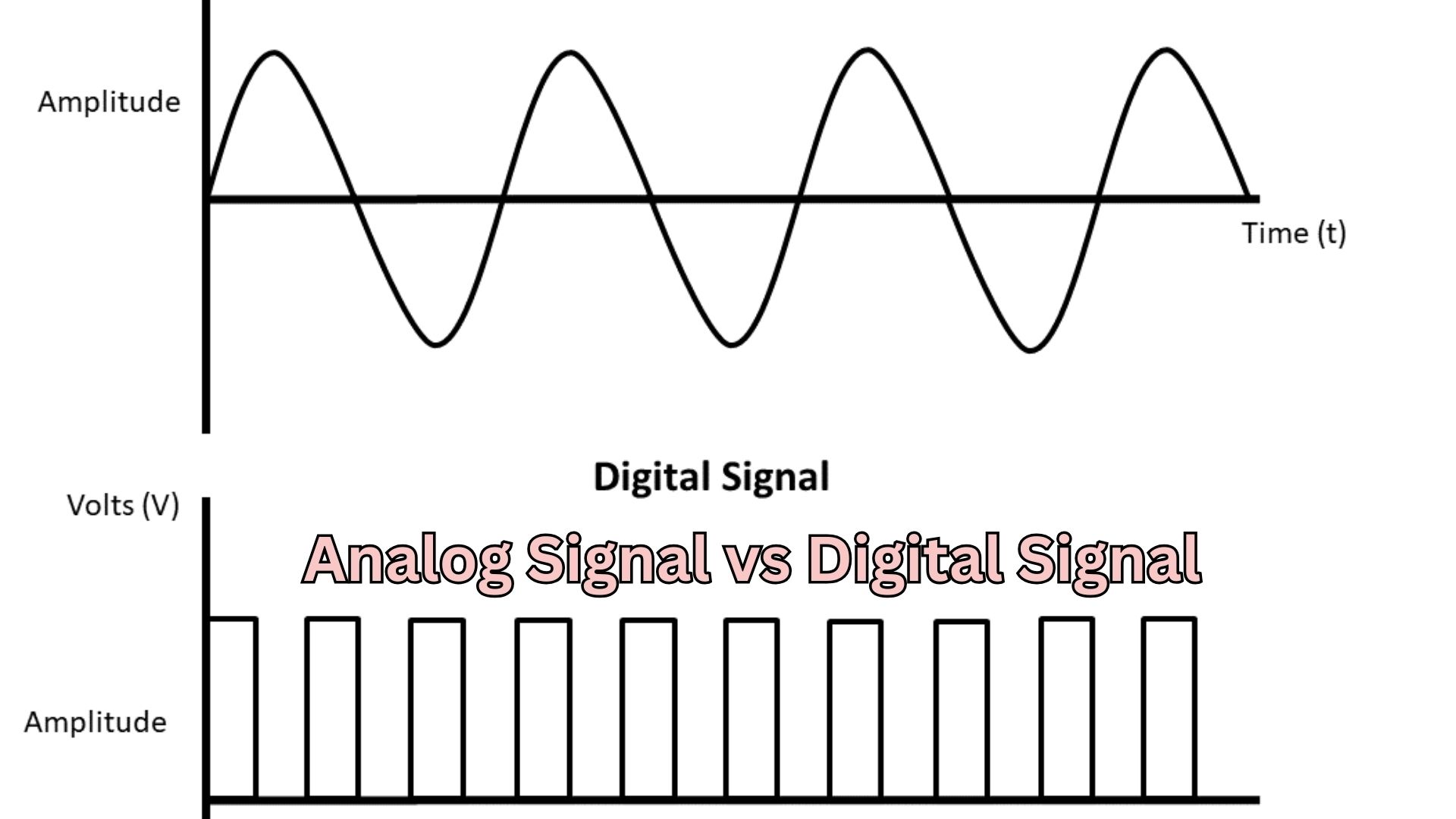
Analog signal vs digital signal is a fundamental concept in modern electronics, communication, and computing. From streaming music to sending data across networks, these two signal types are constantly at work behind the scenes. Understanding their differences is not just for engineers—it can help anyone grasp how modern devices operate and why digital technology dominates today.
In this 2026 guide, we will break down the core differences, advantages, real-world examples, and practical applications of analog and digital signals. You’ll also see why digital systems have taken over, where analog still shines, and how both work together seamlessly in today’s technology-driven world.
What Is an Analog Signal?
An analog signal is a continuous waveform that represents information through smooth variations in voltage, current, or frequency. These signals closely mimic natural phenomena, making them ideal for capturing real-world data such as sound, light, or temperature.
For example, when you speak into a traditional microphone, your voice generates sound waves. The microphone converts these waves into continuous electrical signals, which then travel through wires or other media.
Classic analog examples include:
- Vinyl record players
- FM radio broadcasts
- Old landline telephones
- Analog television systems
Analog signals provide rich, high-fidelity representations but are highly susceptible to interference and noise.
What Is a Digital Signal?
Digital signals, in contrast, represent information using discrete values—usually in binary format (0s and 1s). Instead of continuous waves, digital signals have distinct “high” and “low” levels.
For example, your smartphone converts your voice into binary data using an analog-to-digital converter (ADC). This digital data can then be transmitted, stored, and processed without losing quality.
Everyday digital examples include:
- Smartphones and tablets
- Wi-Fi and 5G networks
- Streaming services like Netflix or Spotify
- Computer processors and USB devices
Digital systems dominate modern technology due to their reliability, error resistance, and efficiency.
Analog Signal vs Digital Signal: Key Differences
When we compare analog signal vs digital signal, several key differences emerge:
- Representation: Analog is continuous; digital is discrete.
- Noise Resistance: Analog degrades gradually with noise; digital either works or doesn’t, often correcting minor errors automatically.
- Bandwidth Use: Digital may need more bandwidth but allows compression; analog is simpler but suffers with long-distance transmission.
- Storage & Duplication: Digital data can be stored and copied indefinitely without loss, while analog deteriorates over time.
Understanding these differences is essential for anyone working with modern technology.
Real-World Examples You Encounter Daily
Consider your daily life:
- Listening to an FM radio with static shows analog noise interference.
- Streaming a song on Spotify continues smoothly despite minor internet fluctuations, demonstrating digital reliability.
- Security cameras today use digital IP cameras instead of older analog CCTV systems, providing higher resolution and remote access.
These examples highlight why digital technology has become the backbone of modern electronics.
Advantages of Analog Systems
Analog signals have advantages in specific contexts:
- Smooth, continuous representation for high-fidelity audio.
- Simpler circuits for low-power applications.
- Direct output from sensors measuring real-world variables like temperature or pressure.
However, susceptibility to interference is a major limitation.
Advantages of Digital Systems in 2026
Digital systems in 2026 dominate nearly all communication and computing infrastructures. Their advantages include:
- High noise resistance
- Long-distance reliability
- Efficient storage and duplication
- Strong encryption and security
- Seamless integration with modern processors
From AI-powered IoT devices to cloud computing, digital technology ensures precision, efficiency, and scalability.
Bridging Analog and Digital Worlds
Despite digital dominance, the world remains fundamentally analog. Microphones, cameras, and sensors produce continuous signals that must be converted for digital processing.
- ADC (Analog-to-Digital Converter): Converts continuous signals into binary data.
- DAC (Digital-to-Analog Converter): Converts digital data back into analog signals for playback or display.
For example, when watching YouTube, digital video data is converted to analog signals that your screen can display.
Comparison: Performance, Reliability, and Practical Use
- Performance: Analog provides smooth curves, but digital maintains integrity over distance.
- Reliability: Digital wins for error correction and long-distance communication.
- Practical Use: Analog is ideal for sensors and high-quality audio; digital powers networking, computing, and streaming.
- Cost: Digital may require more hardware initially but scales efficiently for large systems.
Which One Rules in 2026?
The choice depends on the application:
- Analog: Preferred for natural sound capture, sensor data, or specialized instrumentation.
- Digital: Essential for global communication, cloud services, AI networks, and secure data transmission.
Most modern systems strategically combine both, capturing analog input and processing digitally.

Why This Topic Remains Relevant
Understanding analog signal vs digital signal is evergreen knowledge. With AI, smart devices, 5G/6G technology, and IoT expanding rapidly in 2026, signal comprehension remains crucial for engineers, students, and tech enthusiasts. Well-structured, authoritative content like this continues to rank and attract clicks, even after Google core updates.
Conclusion: Mastering the Signal Landscape
Analog and digital signals are complementary technologies. Analog offers natural, continuous representation, while digital ensures efficiency, reliability, and global scalability. Modern electronics rely on a blend of both, making it essential to understand their characteristics, advantages, and limitations.
By mastering these concepts, you gain insights applicable to smartphones, streaming, AI, networking, and the future of technology.

Frequently Asked Questions
How do analog and digital signals differ in the way they carry information?
Analog signals flow in a smooth, continuous manner, capturing every subtle change, while digital signals use separate, distinct steps—usually represented by 0s and 1s—to encode information in a precise, on-or-off format.
Why are digital signals more resistant to noise?
Digital signals use error detection and correction, allowing minor interference to be fixed automatically.
Are analog signals obsolete?
No. They remain critical in sensors, audio systems, and initial data capture before digital conversion.
Which signal is better for long-distance transmission?
Digital signals generally perform better due to error correction and data regeneration capabilities.
Also Read: Before It’s News: The Shocking Truth and Powerful Impact of Alternative Media