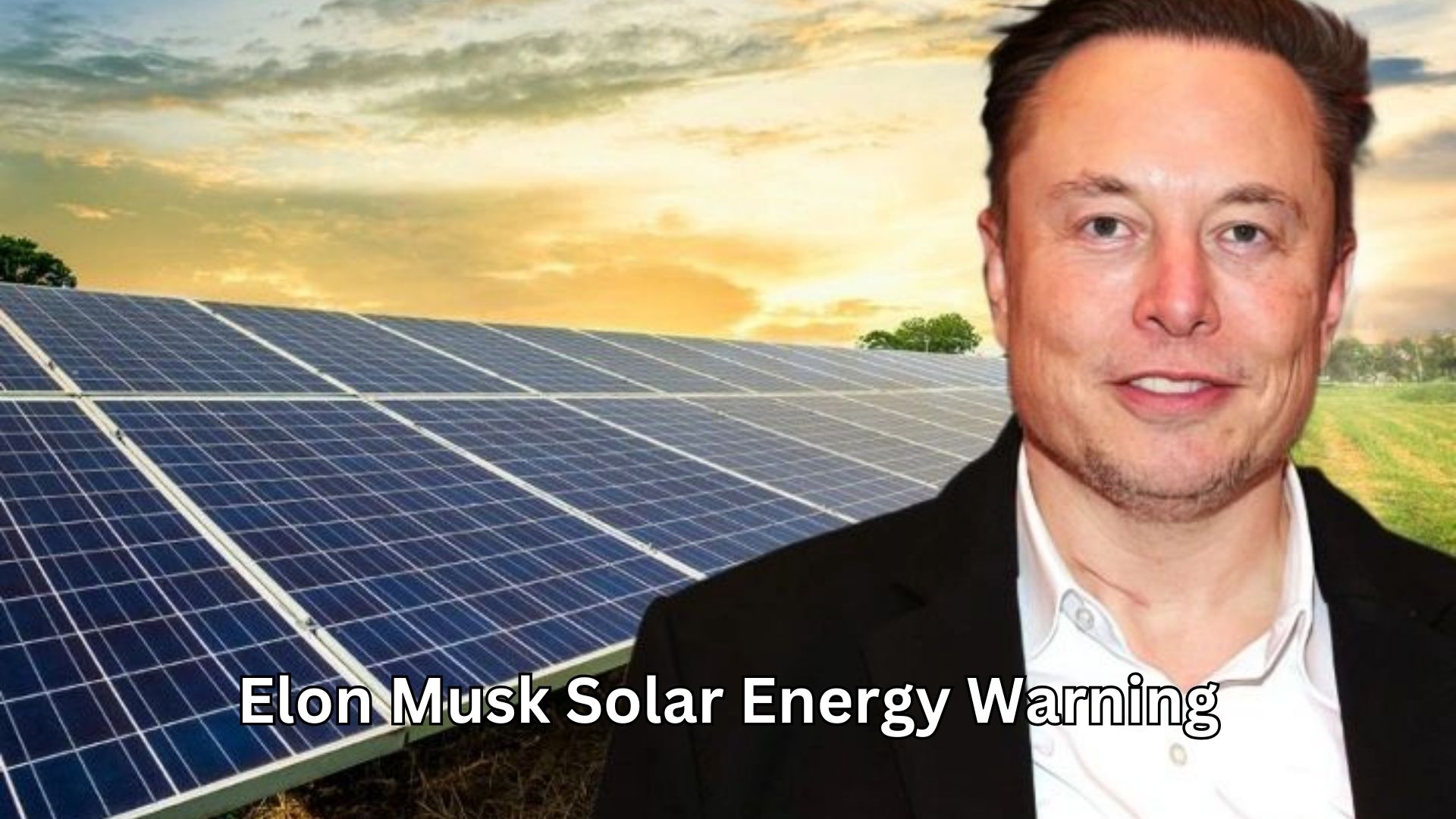
The Elon Musk solar energy warning has sparked intense global debate, especially as the world races toward renewable power solutions in 2026. While solar energy is often presented as a perfect answer to climate change, Musk has repeatedly cautioned that the transition is far more complex than headlines suggest. His message is not anti-solar; instead, it highlights hidden risks, infrastructure gaps, and storage limitations that governments and investors must address before celebrating a fully renewable future.
As clean energy adoption accelerates across the United States, Europe, and Asia, Musk’s concerns are gaining renewed relevance. Rising electricity demand from electric vehicles, AI data centers, and expanding populations means solar power alone may not be enough unless supported by strong battery storage and grid upgrades. This article explores what Musk truly meant, real-world examples, comparisons with other renewable solutions, and why this discussion matters more than ever in 2026.
Why Elon Musk’s Solar Concerns Matter in 2026
Global renewable investment hit record levels in recent years, yet power shortages and grid instability continue to appear even in developed countries. Musk, the CEO of Tesla, has long advocated for solar panels combined with large-scale batteries like the Powerwall and utility-grade storage systems. However, he has also warned that generating solar electricity is only half the equation.
In several public discussions and interviews, Musk emphasized that without efficient energy storage, solar production can become inconsistent. Solar panels produce maximum output during peak sunlight hours, but electricity demand often rises in the evening. This imbalance creates stress on national grids.
In 2026, the challenge has intensified. Artificial intelligence infrastructure, cryptocurrency mining, and electric vehicle charging networks require stable, continuous power. Solar alone cannot guarantee that reliability without massive storage expansion.
The Real Meaning Behind the Elon Musk Solar Energy Warning
The Elon Musk solar energy warning does not argue against renewable energy. Instead, it stresses three key realities: storage limitations, grid modernization needs, and scalability challenges.
First, battery production must expand dramatically to store daytime solar energy for nighttime use. Without this, countries risk blackouts or dependence on fossil fuel backup plants.
Second, power grids in many regions were designed decades ago for centralized coal or gas plants. Integrating distributed solar farms requires new transmission infrastructure, smart grid technology, and digital monitoring systems.
Third, raw material supply chains for lithium, nickel, and other battery components remain vulnerable. If mining and refining capacity cannot keep pace, clean energy expansion may slow.
Musk’s broader point is about system-level thinking. Solar panels are only one piece of a much larger puzzle.
Real-World Example: California’s Energy Experience
California provides a powerful example of both solar success and challenges. The state leads the United States in solar capacity and has experienced record-breaking renewable generation. Yet during extreme heatwaves, grid operators have sometimes issued conservation alerts.
The issue is not insufficient sunlight; it is timing and storage. When solar output declines after sunset, demand for air conditioning remains high. Without enough stored energy, the grid must rely on natural gas or imported electricity.
Tesla’s large-scale battery installations have helped stabilize certain regions, demonstrating Musk’s argument in action. Solar works best when paired with advanced storage technology.
Comparison: Solar Power vs. Wind and Nuclear Energy
To better understand the Elon Musk solar energy warning, it helps to compare solar with other energy sources.
Wind power also depends on weather conditions, but wind patterns sometimes complement solar generation by increasing at night. However, wind farms require significant land and transmission infrastructure.
Nuclear energy provides stable, continuous output regardless of weather. Countries like France have maintained lower carbon emissions partly due to strong nuclear programs. However, nuclear plants involve high upfront costs, long construction timelines, and public safety concerns.
Solar remains cheaper and faster to deploy than nuclear, and more scalable than many traditional systems. Yet without storage integration, it cannot replace baseload generation entirely.
The ideal solution appears to be a diversified energy mix supported by storage and smart grid technology.
Technological Advances Since 2024
Since 2024, battery technology has improved significantly. Lithium iron phosphate batteries have become more affordable, and solid-state battery research has advanced. Companies including Tesla and other global manufacturers have expanded gigafactory production to increase supply.
In 2026, grid-scale batteries are being installed at unprecedented rates. Countries such as Australia and Germany are investing heavily in energy storage facilities capable of powering thousands of homes during peak demand.
These improvements address part of Musk’s concern. However, global demand continues to grow even faster. Data centers supporting artificial intelligence consume enormous electricity, increasing pressure on renewable infrastructure.
Economic Implications for Investors
The Elon Musk solar energy warning also carries financial implications. Investors who focus only on panel manufacturers may overlook the importance of storage companies, grid technology providers, and raw material suppliers.
Renewable energy stocks can be volatile because the industry depends on policy incentives, technological breakthroughs, and commodity prices. Musk’s broader message encourages long-term thinking rather than short-term hype.
Energy markets in 2026 are shifting toward integrated systems. Companies offering complete solutions—solar generation, battery storage, and software-based grid management—are better positioned for sustained growth.
Environmental Perspective
From an environmental standpoint, solar energy remains one of the cleanest power sources available. It helps lower carbon emissions while reducing reliance on traditional fossil-based energy sources.
However, large-scale solar farms require land use planning, and battery production involves mining activities that must be managed responsibly. Musk has acknowledged these trade-offs while emphasizing that renewable systems still produce far lower emissions than coal or oil over their lifetime.
Sustainability does not mean perfection. It means continuous improvement.

Addressing Common Misinterpretations
Some critics misinterpret the Elon Musk solar energy warning as skepticism about renewable energy. In reality, Musk has invested billions in advancing solar technology through Tesla’s energy division.
His warning focuses on preparation and infrastructure readiness. Transitioning the entire global energy system requires careful planning, manufacturing expansion, and government cooperation.
Ignoring storage and grid modernization could delay progress rather than accelerate it.
The Global Energy Outlook in 2026
In 2026, more than one-third of new power capacity added worldwide comes from renewable sources. Electric vehicle adoption continues to grow, and many countries have announced carbon neutrality targets for the coming decades.
At the same time, extreme weather events highlight the need for resilient energy systems. Heatwaves, storms, and cold snaps stress grids and expose weaknesses in infrastructure.
The Elon Musk solar energy warning aligns with this reality. Clean energy must also be reliable energy.
What This Means for Homeowners
For homeowners considering rooftop panels, Musk’s perspective reinforces the value of pairing solar systems with home batteries. A combined setup allows households to store excess daytime electricity and reduce reliance on the grid at night.
In regions with unstable grids, battery-backed systems provide backup power during outages. Over time, falling battery costs are making such systems more accessible.
Consumers should evaluate not just panel efficiency but also storage capacity and smart energy management options.
Future Innovation and Scalability
The next phase of renewable growth may involve advanced battery chemistries, hydrogen storage, and improved grid interconnections between regions. Artificial intelligence is also being used to predict demand patterns and optimize energy distribution.
If these innovations scale successfully, many of Musk’s concerns could be resolved within the next decade.
However, progress depends on policy support, private investment, and global cooperation.
Conclusion: A Balanced Vision for the Energy Future
The Elon Musk solar energy warning is not a rejection of renewable power. It is a reminder that energy transitions require more than optimism. Solar panels alone cannot power a modern, electrified world without strong storage systems and upgraded grids.
In 2026, the conversation has matured. Governments, companies, and investors increasingly recognize that renewable success depends on integration and infrastructure. Real-world examples such as California demonstrate both the promise and the challenges.
As someone who closely analyzes renewable energy markets and long-term digital trends, I believe Musk’s message encourages strategic thinking rather than fear. Clean energy remains the future, but thoughtful planning ensures that this future is stable, affordable, and resilient.
The world stands at a critical turning point. By addressing storage limitations and grid modernization now, we can transform a warning into an opportunity.

Frequently Asked Questions
What is Elon Musk’s main concern about solar energy?
Musk’s primary concern is not about solar panels themselves but about storage capacity and grid reliability. Without large-scale batteries and modern infrastructure, solar generation alone may not meet continuous electricity demand.
Does Elon Musk support renewable energy?
Yes, he strongly supports renewable energy and has invested heavily in solar and battery technology through Tesla’s energy division. His warning focuses on system readiness rather than opposition.
Why is energy storage important for solar power?
Solar panels produce electricity during sunlight hours, but demand often peaks in the evening. Storage systems capture excess daytime energy for later use, ensuring grid stability and reducing reliance on fossil fuels.
Has battery technology improved by 2026?
Yes, battery costs have decreased and efficiency has improved, especially with lithium iron phosphate and emerging solid-state research. However, global demand continues to grow rapidly.
Will solar energy replace fossil fuels completely?
Solar will likely play a major role in reducing fossil fuel use, but most experts agree that a diversified energy mix—including wind, nuclear, and storage solutions—will be necessary for long-term stability.
Also Read: Analog Signal vs Digital Signal: Shocking Differences That Every Tech Lover Must Know in 2026