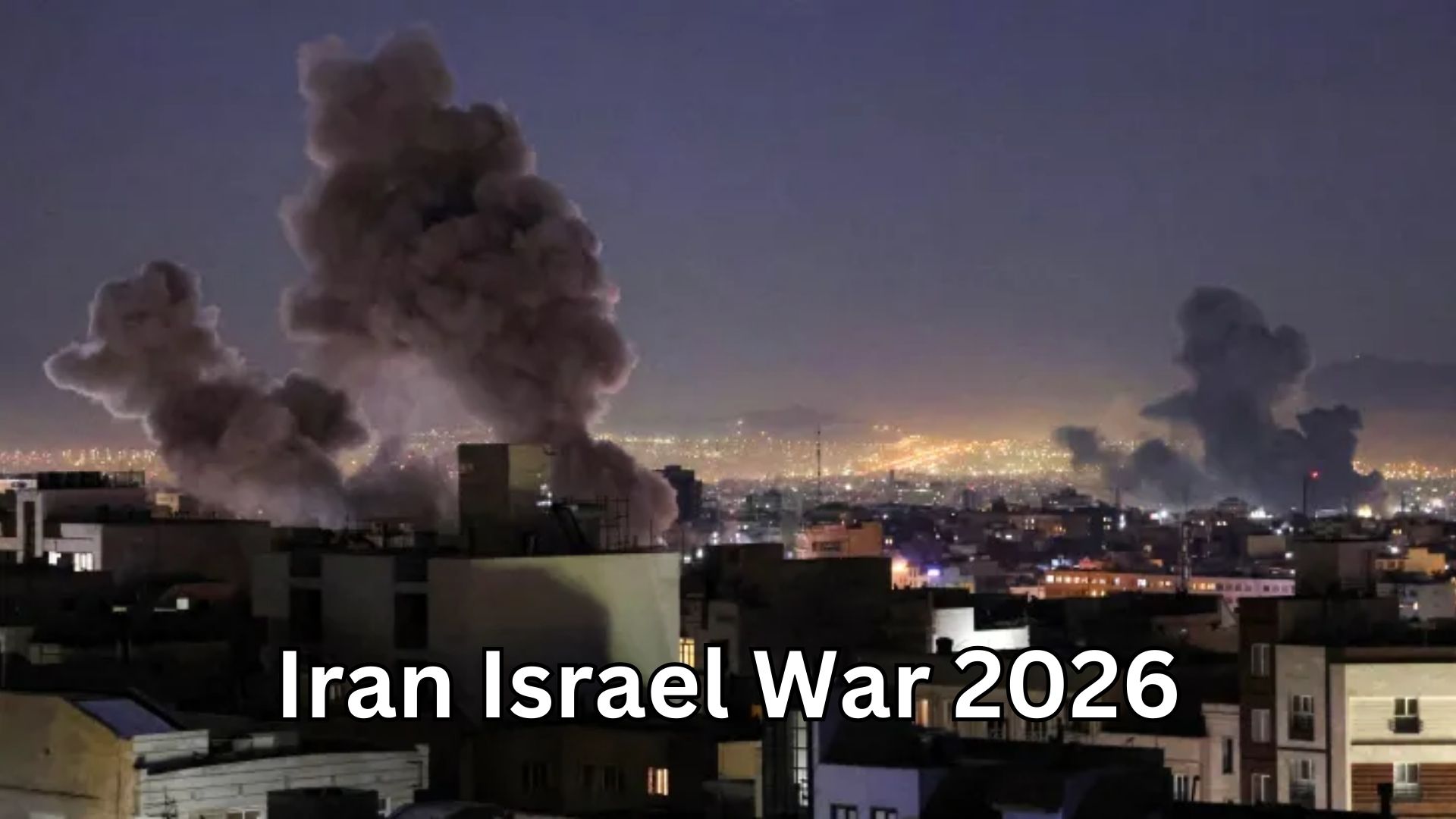
The Middle East stands on the edge of an abyss, and the world holds its breath as the countdown toward an inevitable confrontation accelerates with each passing day. Intelligence analysts, regional experts, and military strategists increasingly warn that a full-scale iran israel war 2026 has transformed from a theoretical possibility into a probable reality that could reshape the entire global order. The question no longer revolves around whether these two bitter enemies will clash directly, but rather when the first missiles will fly and how the international community will grapple with the devastating aftermath of such a conflict.
Walking through the streets of Tel Aviv or Tehran today, an ordinary person feels the tension hanging in the air like humidity before a massive storm. Families continue their daily routines, children attend schools, and markets bustle with activity, yet beneath this fragile normalcy lurks the terrifying knowledge that everything could change in an instant. The decades-long shadow war fought through proxies, cyber attacks, and covert operations appears to be reaching its natural and dangerous conclusion as both nations prepare their populations for what comes next.
The Nuclear Precipitate Driving Iran Israel War 2026
Iran’s nuclear program sits at the very heart of this escalating crisis, functioning as both a shield and a trigger for the impending disaster that looms over the region. Western intelligence agencies now estimate that Tehran possesses enough enriched uranium to produce multiple nuclear weapons within weeks should the leadership make that fateful decision. This rapid advancement represents a direct challenge to Israel’s core national security doctrine, which has always maintained that a nuclear-armed Iran poses an unacceptable existential threat to the Jewish state’s survival.
Consider the chilling words of Iranian military commanders who openly discuss wiping Israel off the map alongside the regime’s simultaneous pursuit of nuclear capabilities. For Israeli defense planners, this combination creates a nightmare scenario that demands action regardless of the consequences. The memory of the Holocaust remains seared into the national consciousness, and Israeli leaders across the political spectrum share the solemn vow that never again will Jews face annihilation without the means to defend themselves.
The April 2024 exchange of direct fire between these two powers shattered decades of carefully maintained rules of engagement. When Iran launched hundreds of drones and missiles toward Israeli territory, and Israel responded with strikes deep inside Iran, both nations crossed thresholds that previously seemed unthinkable. That exchange, while carefully calibrated to avoid full escalation, demonstrated how quickly tensions could spiral out of control. Military experts analyzing those events describe them as a dress rehearsal for the main event potentially coming in 2026.
The Fortified Facilities Challenge
Iran has learned critical lessons from previous attacks on nuclear facilities in the region. Unlike Iraq’s Osirak reactor in 1981 or Syria’s facility in 2007, Iran’s nuclear infrastructure lies buried deep inside mountains, dispersed across the vast country, and protected by sophisticated Russian-built air defense systems. The Fordow facility, enriched deep inside a mountain near Qom, presents an especially difficult target that would require specialized bunker-busting munitions and potentially multiple waves of attacks to significantly damage.
Israeli military planners face an excruciating dilemma as they contemplate striking these facilities. A successful operation would require launching hundreds of aircraft, refueling tankers, and support assets in a coordinated campaign that would be impossible to hide. Iran would have ample warning and would undoubtedly retaliate with everything in its considerable arsenal. Yet allowing Iran to cross the nuclear threshold presents an equally unacceptable outcome. This painful calculation drives the relentless momentum toward a direct clash.
Regional Proxy Armies and the Multi-Front Inferno
Understanding the full horror of what an iran israel war 2026 would entail requires examining the network of armed groups Tehran has spent four decades building around Israel’s borders. Hezbollah in Lebanon represents the crown jewel of this strategy, possessing an estimated 150,000 rockets and missiles, many of which are precision-guided and capable of striking any target inside Israeli territory. Unlike Hamas in Gaza, which Israel has fought multiple wars against, Hezbollah functions as a professional military force with combat experience gained fighting in Syria’s brutal civil war.
Imagine the scene on the first day of such a conflict. Sirens wailing across Tel Aviv, Haifa, and Jerusalem not for a few hours but continuously for days on end. The Iron Dome system, so effective against smaller barrages, would become overwhelmed by the sheer volume of incoming fire. Hezbollah commanders have studied Israeli vulnerabilities for years and possess detailed targeting information for critical infrastructure including power plants, water desalination facilities, military bases, and civilian population centers.
A young mother in Kiryat Shmona, a town located just two kilometers from the Lebanese border, described her fears to a visiting journalist last month. She explained how her children have already learned to distinguish between different types of rocket sounds and know exactly how many seconds they have to reach shelter based on the launch location. This constant state of hyper-vigilance takes an enormous psychological toll that accumulates over years and generations.
Iranian Retaliation Capabilities
Beyond the proxy forces surrounding Israel, Iran itself possesses significant military capabilities that would feature prominently in any direct conflict. The Islamic Revolutionary Guard Corps operates an arsenal of ballistic missiles with ranges capable of reaching any target in the Middle East, including Israel. During the April 2024 exchange, Iran demonstrated the ability to launch coordinated strikes involving multiple missile types and drone swarms designed to overwhelm air defenses.
The USS Carney, an American destroyer operating in the eastern Mediterranean during that exchange, fired numerous interceptors to help defend Israel, highlighting how quickly the United States would become entangled in any major confrontation. American bases throughout the region, including Al Udeid in Qatar, Al Dhafra in the UAE, and numerous facilities in Iraq and Syria, would face immediate threats from Iranian missiles and proxy forces. The potential for a wider war drawing in global powers represents perhaps the most frightening aspect of this entire scenario.
Economic Warfare Through the Strait of Hormuz
Any discussion of an iran israel war 2026 must address the global economic devastation that would accompany such a conflict. The Strait of Hormuz, a narrow waterway separating Iran from the Arabian Peninsula, serves as the conduit for approximately twenty percent of the world’s oil supply. Iranian leaders have repeatedly threatened to close this strategic chokepoint if attacked, and they possess the military capabilities to make good on this promise through a combination of naval mines, anti-ship missiles, and swarms of fast attack boats.
Picture the immediate aftermath of such a closure. Oil prices, already volatile due to geopolitical tensions, would skyrocket past previous records, potentially reaching two hundred dollars per barrel or more. Gasoline prices at pumps across America and Europe would double or triple within weeks. Transportation costs for every good imaginable would surge, reigniting global inflation and potentially plunging the world economy into a severe recession. Developing nations heavily dependent on energy imports would face especially dire circumstances, with some potentially facing humanitarian crises as fuel for hospitals and basic infrastructure becomes unaffordable.
The 2019 attacks on Saudi oil facilities at Abqaiq and Khurais, claimed by Iranian-backed Houthi rebels but widely attributed to Iran itself, demonstrated the vulnerability of energy infrastructure to precision strikes. Those attacks temporarily knocked out half of Saudi Arabia’s oil production and sent shockwaves through global markets. A full-scale war would involve attacks on a much larger scale, potentially targeting not only production facilities but also tankers, pipelines, and export terminals throughout the Gulf region.
Cyber Warfare Escalation
Alongside kinetic military operations, the cyber domain would serve as a critical battlefield in any conflict between these technologically advanced adversaries. Israel ranks among the world’s most sophisticated cyber powers, with Unit 8200 producing generations of talented operatives who have conducted operations against Iranian nuclear facilities, most famously through the Stuxnet worm that physically destroyed centrifuges at Natanz.
Iran has developed significant offensive cyber capabilities in response, launching attacks against Saudi Aramco, American banks, and various Israeli targets. In a full-scale war, these attacks would escalate dramatically, potentially targeting critical infrastructure including electrical grids, water treatment facilities, financial systems, and communications networks. The interconnected nature of modern society means that cyber attacks could easily spill beyond the immediate combatants, affecting neutral countries and global systems in unpredictable ways.
Imagine hospitals unable to access patient records, air traffic control systems temporarily failing, or banking networks going offline for extended periods. The chaos resulting from such attacks would compound the physical destruction caused by missiles and bombs, creating a layered disaster that would challenge even the most prepared emergency response systems.

Comparing Military Capabilities in a Direct Confrontation
Examining the military balance between these two regional powers reveals why any direct conflict would prove so devastating for both sides. Israel possesses arguably the most capable air force in the region, with F-35 stealth fighters, F-15 and F-16 platforms, and an extensive array of precision-guided munitions. Israeli pilots train constantly for long-range strike missions and possess demonstrated capability to operate deep inside enemy territory, as shown by the 2018 strike that destroyed Iran’s advanced nuclear archive in Tehran.
Iran fields a different type of military, focused less on competing directly with Israeli air power and more on asymmetric capabilities designed to inflict maximum pain through missile barrages and proxy forces. The sheer quantity of Iran’s missile inventory, combined with the depth of its strategic depth and population centers, means that Israel cannot simply destroy Iranian military capabilities through air power alone. Any Israeli strike would represent the beginning of a prolonged conflict rather than a quick, decisive operation.
The United States maintains significant military assets throughout the region, including carrier strike groups, air bases, and special operations forces. American involvement, while likely intended to help defend Israel and de-escalate the conflict, could easily draw Washington into a wider war with Iran that neither side truly wants. Iranian leaders have stated repeatedly that American bases throughout the region would be targets if the US participates in attacks on Iran.
The Human Cost Beyond Statistics
Numbers and military hardware discussions often obscure the most important element of any war: the human beings whose lives get destroyed by decisions made in distant capitals. An iran israel war 2026 would produce casualties on a scale that defies easy comprehension. Civilians in both countries would bear the brunt of the suffering, as missiles and rockets lack the precision to distinguish between military targets and residential neighborhoods.
Consider the city of Haifa, Israel’s third-largest metropolitan area, located within easy range of Hezbollah rockets. Hundreds of thousands of civilians live and work in Haifa, including major industrial facilities, ports, and universities. A sustained rocket campaign against this city would force mass evacuations, disrupt essential services, and inevitably produce horrific scenes of destruction and loss. The same applies to Tehran, a sprawling metropolis of nearly fifteen million people that would face Israeli air strikes targeting military and nuclear facilities located throughout the urban area.
Children growing up in both societies already experience elevated rates of anxiety, PTSD, and other trauma-related conditions due to the constant threat of violence. A full-scale war would condemn an entire generation to grow up surrounded by death, destruction, and the normalization of horror. The psychological scars from such an experience would persist for decades, shaping future attitudes toward conflict and peace in ways that cannot be predicted.
International Diplomatic Efforts and Their Limitations
Despite the terrifying trajectory toward conflict, diplomatic efforts continue behind the scenes to prevent the worst-case scenario. European powers, Gulf Arab states, and others maintain channels of communication with both sides, attempting to find off-ramps from the current escalation cycle. The Biden administration, despite its many foreign policy challenges, has consistently prioritized preventing a wider Middle Eastern war that would consume American attention and resources.
The Gulf Arab states face an especially difficult position in any Iran-Israel conflict. Nations like Saudi Arabia, the UAE, and Qatar maintain relationships with both sides and have no desire to see their territory used as launching pads for attacks or to become battlegrounds themselves. The Abraham Accords, normalizing relations between Israel and several Arab states, created new diplomatic possibilities but also new vulnerabilities in the event of a regional war.
Russia and China, both maintaining relationships with Iran while also engaging with Israel and Gulf states, possess potential leverage that could prove crucial in crisis situations. Neither global power wants to see a major Middle Eastern war that disrupts energy supplies and draws in outside powers, yet both have limited influence over the domestic political dynamics driving Iran and Israel toward confrontation.
The Domestic Politics Driving Conflict
Understanding the momentum toward war requires examining the internal political situations in both countries. Iranian hardliners, facing domestic discontent over economic conditions and social restrictions, find utility in confronting the foreign enemy as a means of rallying popular support. The regime’s legitimacy rests partly on its opposition to Israel and the United States, making compromise difficult without appearing weak to internal audiences.
Israeli domestic politics similarly push toward confrontation rather than accommodation. The current government includes parties committed to aggressive security policies and skeptical of diplomatic engagement with adversaries. Public opinion in Israel, shaped by decades of conflict and terrorist attacks, supports tough responses to perceived threats. Leaders who appear weak on security risk immediate political consequences, creating incentives for escalation rather than restraint.

The Glimmer of Hope Amidst Darkness
While the preceding analysis paints a bleak picture, history demonstrates that conflicts apparently destined to occur sometimes get avoided through last-minute diplomacy, human error, or simple luck. The Cuban Missile Crisis brought the world closer to nuclear war than any event before or since, yet cool heads and back-channel communications found a path through that crisis. Similar possibilities exist today, though the complexity of the current situation exceeds even that dangerous moment in 1962.
Track II diplomacy, involving former officials, academics, and civil society representatives from both sides, continues quietly even as official relations remain frozen. These unofficial channels occasionally produce ideas and frameworks that eventually influence official policy. Understanding exists among thoughtful people in both societies that neither side would emerge victorious from a full-scale war, and that mutual destruction represents the most likely outcome of continued escalation.
The international community must communicate clearly and consistently that any nuclear escalation would produce consequences beyond anything previously contemplated. Deterrence worked throughout the Cold War by making the costs of aggression obviously and overwhelmingly unacceptable. Applying similar logic to the current crisis requires creativity, persistence, and coordination among all major powers with interests in the region.
Conclusion
Standing at the precipice of what could become the most destructive Middle Eastern conflict in modern history, we must recognize that the choice between war and peace remains fundamentally human. The iran israel war 2026 scenario terrifies precisely because it seems so logical, so inevitable, given the trajectory of current events and the positions staked out by both sides. Yet logic and inevitability differ fundamentally, and space remains for wisdom to prevail over fear, for diplomacy to succeed where military action would fail.
Every person reading this analysis possesses some measure of influence, however small, over the world we collectively create. Supporting leaders who prioritize peace over confrontation, demanding diplomatic engagement rather than military posturing, and remembering the human faces behind the geopolitical abstractions all contribute to building pressure against war. The alternative, watching helplessly as our world burns, proves too terrible to accept without exhausting every possible alternative first.
The people of Iran and Israel deserve to live in peace, to raise their children without fear of missiles falling from the sky, to build prosperous societies that contribute to human flourishing rather than human destruction. Achieving that vision requires courage from leaders and citizens alike, courage to choose the difficult path of reconciliation over the easy path of conflict. May they find that courage before it is too late.
Frequently Asked Questions
What would actually trigger an Iran Israel war in 2026?
The most likely trigger involves Israeli intelligence detecting that Iran has decided to sprint toward completing a nuclear weapon. This would create a use-it-or-lose-it moment for Israeli leadership, forcing a decision about whether to launch preventive strikes. Other potential triggers include a major Hezbollah attack that escalates beyond previous conflicts, a direct Iranian strike killing many Israelis, or a miscalculation during a crisis that spirals beyond anyone’s control.
How would Hezbollah participate in such a conflict?
Hezbollah would almost certainly launch its entire rocket and missile arsenal at Israeli population centers and infrastructure. Unlike previous conflicts where Hezbollah fired limited barrages, a full war would see thousands of rockets fired daily, overwhelming Israeli defenses and causing massive damage. Hezbollah special forces would also attempt to infiltrate northern Israel, seize territory, and inflict casualties on Israeli forces and civilians.
Could Israel destroy Iran’s nuclear program through air strikes?
Israeli air strikes could significantly damage Iran’s nuclear program and delay its progress, but complete destruction remains unlikely given the dispersion and fortification of Iranian facilities. Deeply buried sites like Fordow would prove especially difficult to destroy completely. Iran would also reconstitute any damaged facilities as quickly as possible, meaning that air strikes alone cannot permanently solve the nuclear challenge without ongoing military action.
What role would the United States play in an Iran Israel war?
The United States would almost certainly provide Israel with intelligence, munitions, and diplomatic support while attempting to prevent the conflict from spreading. American military forces in the region would face significant threats and might become directly involved if attacked or if Israeli survival appeared genuinely threatened. However, the extent of American participation would depend heavily on the specific circumstances and the administration in power at the time.
How would global oil markets react to this conflict?
Oil prices would spike immediately and dramatically, potentially reaching levels that trigger global recession. The Strait of Hormuz closure, even temporarily, would remove millions of barrels daily from world markets at a time when spare production capacity remains limited. Every nation on earth would feel the economic effects through higher fuel prices, increased transportation costs, and general economic uncertainty.
Also Read: TechView TheGameArchives: The 2026 Guide That Saves Gaming’s Lost Legends